
Game-Day Screens, AI Shoppers and Map Ads: Fresh Growth Plays For Digital Marketers

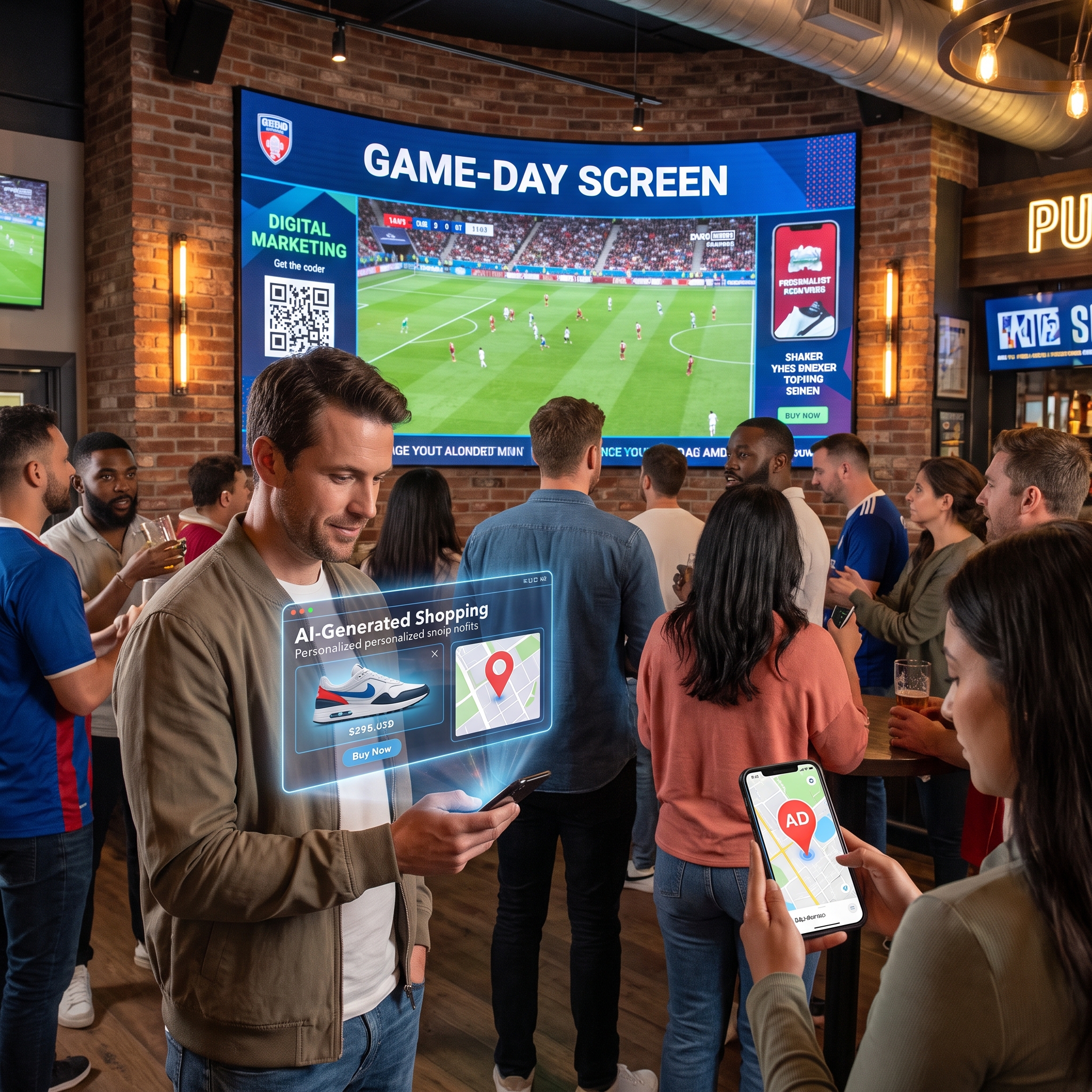
Sports, Streams And Trailheads: Where Attention Is Flocking Right Now
Across this week’s media moves, one pattern is hard to miss: audiences are clustering around sports, shared adventures and the screens that follow them everywhere. For growth-focused marketers, that is less about sponsorship logos and more about building programs that move with fans in real time.
Firehouse Subs, for example, has tied a multiyear deal with Major League Baseball to a very simple behavior trigger. Any time an MLB game goes into extra innings on a Friday, Saturday or Sunday, customers who purchase a medium sub can get a second one free. That offer turns late-game drama into a predictable acquisition lever you can plan and staff around.
Something similar is happening in the outdoor space. Toyota is expanding its partnership with an outdoor digital navigation platform through a new Trail Creators Program that brings together outdoor storytellers to inspire responsible recreation with content and education. Instead of just showing trucks on cliffs, the brand is helping shape the information layer people use while they explore.
Live sports on screens are delivering parallel momentum. C15 Studio is expanding ad options for F1 TV and Yahoo Sports TV through a variety of packages with a focus on live sports. Meanwhile, Fox and Telemundo dominated month-long World Cup broadcasts, and social media emerged as a key winner, with viral moments like the “Viking Row” celebration of Dutch fans racking up 172 million views on TikTok alone.
TikTok is doubling down on that sports-fan behavior by forging a multi-year partnership with the NBA and WNBA, offering in-app game highlights plus AI-powered ad options. And women’s sports are gaining fresh branding energy as a new women’s professional baseball league debuts with team identities created by Arrivals + Departures, each named for a barrier-breaking woman.
For digital marketers, the takeaway is clear: sports and outdoor experiences are becoming always-on environments, not just once-a-year tentpoles.
- Link offers to in-game or in-event triggers, as Firehouse Subs is doing with extra innings.
- Show up in the tools people actually use during those moments, from navigation apps to social video feeds.
- Treat women’s sports and global tournaments as long-term brand-building platforms rather than one-off experiments.
AI Agents At The Cash Register And In The Creative Suite
Another thread running through the latest updates is how quickly AI is moving from novelty to default in both consumer behavior and content creation. This back-to-school season is the first major cycle to introduce agentic agents into shopping routines, and they are not being ignored.
A Tinuiti study cited in recent coverage found that 68% of parents are using conversational AI agents such as ChatGPT and Gemini to simplify the buying process. Parents are asking for product advice, comparing options and planning trips through conversation, not just search boxes. That has direct implications for how you structure product information, FAQs and promo messages.
On the content side, Roblox announced a new “Build” tab where creators can develop mobile-first games with the help of agentic tools. The platform explicitly wants creators to make prompt-generated mobile games, lowering the barrier to producing new experiences that can capture youth attention and brand integrations.
AI is also being wired into ad products themselves. TikTok’s NBA and WNBA deal includes AI-powered ad options, signaling that audience matching, creative assembly or optimization will increasingly happen through AI layers, even when your team never touches a model directly.
Inside agencies, the same trend is reshaping workflows. Brunner’s acquisition of creative analytics platform AdSkate is one example: the platform is positioned as one that takes an analytics approach to transform creative optimization from a subjective process into a data-driven discipline. At the same time, industry voices are asking what happened to the early hype around agentic media buying, noting that standards debates have slowed visible progress even as adoption quietly builds.
- Audit how your product data and offers appear when summarized by conversational AI, not just classic search results.
- Experiment with AI-assisted creative where platforms like TikTok or Roblox do the heavy lifting, but set clear brand guardrails.
- Push partners for transparency on how “AI-powered” ad options decide who sees what and which signals they optimize against.
Maps, Platforms And The New Geography Of Performance
Several platform updates this week are quietly redrawing the map for discovery and measurement. Apple has posted official guidelines and policy terms for businesses planning to buy ad placements inside Apple Maps, even though the service had not yet officially launched at the time of reporting. That positions Maps as another high-intent surface where local businesses and national brands with distributed footprints can compete.
Location also shows up in Toyota’s Trail Creators partnership and in Snapchat’s new alignment with Dick’s Sporting Goods’ media division. That Snapchat partnership focuses on giving advertisers insights into how campaigns on Snapchat impact in-store sales at Dick’s locations. For growth teams, this is a concrete example of retail media and social platforms meeting in the aisle where the sale actually happens.
Meanwhile, regulators are challenging how big platforms handle both discovery and data. The European Commission has ordered Google to share anonymized search data so rival AI services can compete with features like Gemini on Android devices, and rival AI assistant companies can access Android features. Elsewhere, Google users are asking a judge to let an antitrust case proceed related to a search distribution deal with Apple, arguing it limited privacy-protective, ad-free alternatives.
Other legal pushbacks underscore the same theme. Microsoft is accused of browser “dark patterns” that manipulate user choice. Meta faces complaints from Android users over “secret” tracking, while YouTube Premium subscribers have filed suit alleging that an “ad-free” service actually interrupts content with ads. OpenAI and social platforms are facing separate privacy and labeling challenges, from alleged prompt disclosures to laws that would require cigarette-style warnings for social media.
For digital marketers, these fights are not just legal footnotes. They point toward a world where choice screens, consent flows and “ad-free” labels are scrutinized as closely as CPMs.
- Plan test budgets for emerging high-intent surfaces such as Apple Maps ads and upgraded navigation or sports apps.
- Insist on clear documentation of how partners collect, anonymize and share audience data across devices and environments.
- Stress-test your value exchange: if users pay, subscribe or opt in, ensure their actual ad experience matches the promise.
Streaming Scale And Cross-Screen Mix As A Growth Lever
Amid all the platform shifts, audience demand for quality streaming content remains strong. Netflix reports that total worldwide engagement for its content grew 2% to 97 billion viewing hours in the first six months of 2026, with Q2 revenue up 13% despite competition from the Winter Olympics and the World Cup. That kind of scale keeps streaming at the center of many growth plans.
At the same time, industry voices argue that even streaming-first brands still have “tune-in” problems and should consider linear TV ads, which can cost a fraction of targeted ads in premium streaming or on smart TVs, to drive people into subscription environments. The practical takeaway is to treat linear, streaming and social as a system rather than separate silos.
- Use lower-cost linear inventory to create broad awareness, then retarget engaged viewers in streaming and social environments.
- Pair high-attention moments in live sports streams with retail media and social measurement, as F1 TV, Yahoo Sports TV and Snapchat-Dick’s illustrate.
- Feed creative analytics platforms with performance data from every screen to continually refine assets and placements.
From Headlines To Roadmap
Viewed together, this week’s moves offer a practical roadmap for growth-minded marketers. Sports and outdoor experiences are delivering concentrated attention. AI is mediating both how people shop and how content gets made. New ad surfaces in maps, navigation and retail media are tightening the link between impression and in-store sale, while regulators pressure platforms to be more transparent.
The opportunity is to run small, disciplined experiments in each of these arenas now. Align one offer with a sports trigger, test one AI-powered ad format, plan one local campaign using maps or navigation, and connect one social buy to retail sales data.
Do that consistently, and the next round of headlines becomes less about reacting to platform news and more about scaling what you already know works.