
Immersive Brand Systems That Turn VR and AR Experiences into Real Revenue

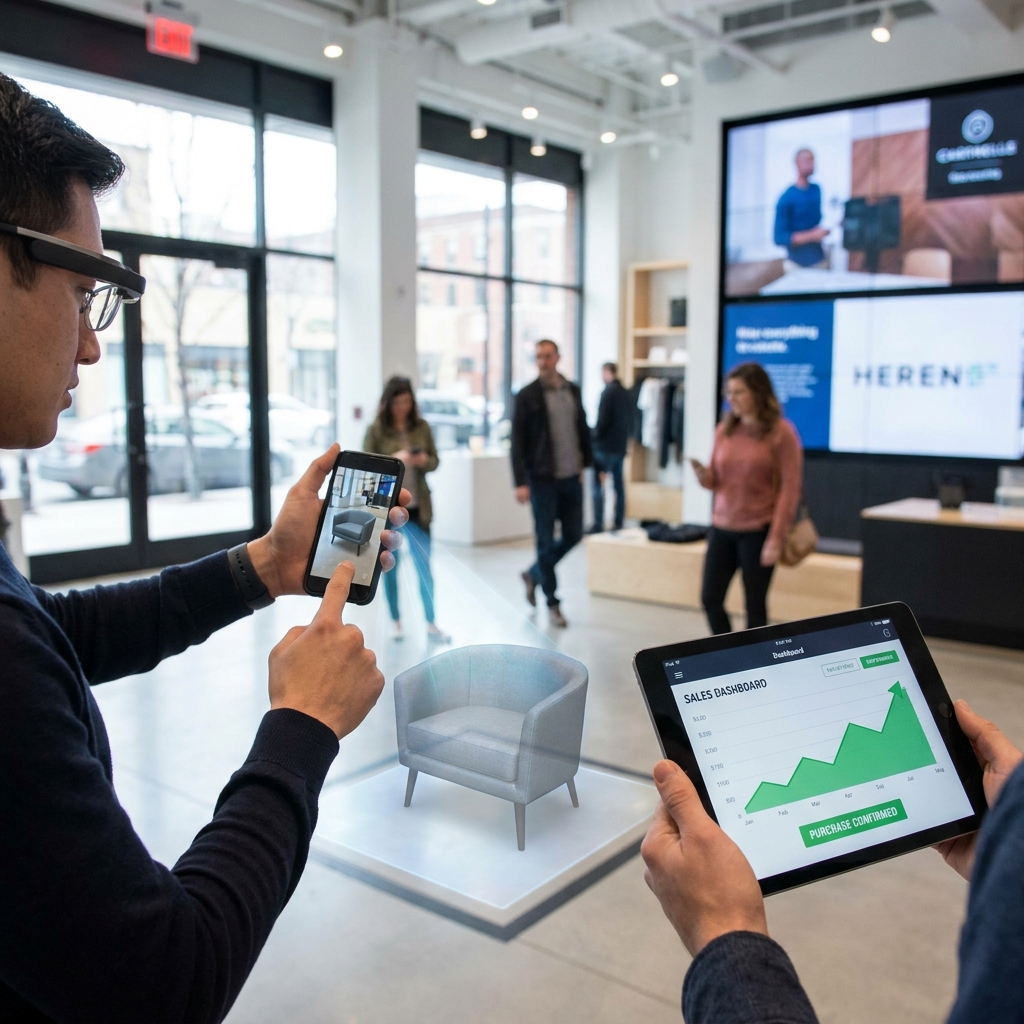
Immersive tech that finally connects brand love to booked revenue
Virtual and augmented reality used to feel like a trade-show stunt, not a serious growth channel. Today, immersive tech is finally close enough to customers’ phones, browsers, and headsets to influence real pipeline. For small and mid-sized teams, the opportunity is not to build the flashiest experience, but to design VR and AR that plug cleanly into your existing content, offers, and funnels. When you treat immersive as part of a repeatable system instead of a one-off spectacle, it becomes another lever you can test, track, and scale.
Immersive experiences as a growth channel, not a gimmick
Immersive technologies such as virtual and augmented reality can shift you from passive viewing to active participation with your brand. Instead of a prospect scrolling past a static ad, they can explore a product, environment, or scenario that makes your offer feel concrete. The key is approaching VR and AR with the same discipline you bring to paid media or email automation, with clear audience definitions, outcomes, and measurement. When that happens, immersive turns from a novelty line item into a channel you can compare directly against clicks, calls, and conversions.
- Start with one core growth objective, such as lead capture or demo bookings.
- Define the exact audience segment that will see and use the immersive experience.
- Set one primary conversion event so you can benchmark performance against existing campaigns.
Thinking in channel terms also prevents overspending on beautiful but unfocused builds. A smaller, strategically scoped immersive asset can outperform a massive virtual world if it lines up tightly with your funnel. For example, an AR product try-on that feeds directly into a checkout page can be far more profitable than a high-budget VR brand film with no call to action. Treat time-to-value as a constraint, building experiences that can go live fast and plug into the offers that already convert. This mindset keeps immersive innovation aligned with revenue rather than vanity metrics.
- Cap initial production timelines so your team can iterate quickly on learnings.
- Connect every experience to an existing landing page, offer, or nurture sequence.
- Use simple creative treatments first, then add complexity based on data, not ego.
Mapping VR and AR to specific funnel stages
VR and AR are not interchangeable buzzwords; they serve different stages of the customer journey. Virtual reality shines when you need depth, immersion, and focused attention, making it ideal for mid-funnel education or high-consideration sales enablement. Augmented reality is friction-light and mobile-first, better suited for top-of-funnel engagement or late-stage product confidence, like visualizing how something fits into a customer’s real environment. When you align the technology with where a buyer is psychologically, you reduce resistance and increase the chance of a next step.
- Use VR for guided product tours, training, or scenario walkthroughs that need full attention.
- Deploy AR for quick try-ons, overlays, and interactive filters that live inside existing apps.
- Reserve more complex builds for high-value accounts or offers with longer deal cycles.
Thinking in funnel stages also helps you budget realistically. You can pilot an AR experience powered by web-based technology that launches from a simple ad, instead of jumping directly into custom headset apps. Over time, you can layer depth by building VR content that sales teams use in demos or at events, tracking how it influences close rates or deal size. This move-from-light-to-deep approach lets you learn where immersive adds real lift before you commit to long timelines or heavy custom development. It also keeps your experimentation closely tied to financial outcomes.
- Begin with web or mobile AR linked to your existing ad and social placements.
- Equip sales with VR content and track performance against non-immersive demos.
- Review funnel data quarterly to decide where to expand or retire immersive assets.
Designing branded worlds that drive action, not just awe
The most profitable immersive experiences feel like guided journeys, not open playgrounds. Every scene, interaction, and choice should move the user closer to clarity about your offer and confidence in taking the next step. That means scripting moments of insight, comparison, and objection handling right inside the environment. Instead of relying on visual spectacle alone, you structure the experience like a high-performing landing page translated into 3D space.
- Open with a clear promise so users instantly know the value of continuing.
- Stage interactions that answer your most common pre-sale questions.
- End with a direct, low-friction call-to-action aligned to your growth goal.
Strong brand integration goes beyond dropping your logo on virtual walls. Colors, motion, copy, and even the pacing of the journey can echo how you position yourself across social and ads. When the immersive story matches the language and offers people see in your other channels, you reinforce memory instead of creating confusion. This coherence turns the experience into an amplifier for the system you already built, rather than a disconnected campaign that burns resources.
- Mirror the same core promise and messaging pillars you use in your top campaigns.
- Re-use proven headlines and hooks inside environment signage and narration.
- Collect in-experience feedback to refine copy and creative across all channels.
Connecting immersive journeys to your social and ad strategy
VR and AR become much more powerful when they are fed by, and feed back into, your content and ad systems. Instead of treating them as their own island, plug immersive assets into the workflows you already run for short-form content, retargeting, and nurture. Social videos can tease the most compelling moments of the experience, turning curiosity into clicks. Once someone has engaged, you can retarget them with tailored creative that references what they saw or did inside the immersive journey.
- Cut highlight clips or screen captures as paid and organic social hooks.
- Build retargeting audiences from immersive participants wherever tracking allows.
- Serve follow-up ads that match the specific product or feature they explored.
AI-powered planning tools, including systems like SocialTrend.ai, can help you translate one immersive concept into a full content calendar. A single VR product walkthrough, for example, can generate scripts for reels, email nurture sequences, and sales call frameworks. By making your immersive asset the strategic centerpiece of a campaign, you extract more value from the initial build and shorten the path to ROI. The experience stops being a one-off event and becomes a reusable source of stories, visuals, and proof.
- Use transcripts and interaction logs as raw material for copy and content prompts.
- Turn common in-experience questions into FAQ posts, carousels, and video explainers.
- Align posting cadence to major immersive launch beats, updates, and feature drops.
Tracking ROI from VR and AR like a growth marketer
Immersive campaigns feel different, but they should still be held to familiar metrics. Define success in terms of cost per qualified lead, influenced pipeline, or conversion lift versus a non-immersive control. Pair in-experience analytics, such as completion rates and interaction hotspots, with downstream performance data from your CRM and analytics stack. When you quantify impact in the same language you use for other channels, it becomes much easier to secure buy-in for future experiments.
- Tag immersive traffic with consistent UTM structures and campaign naming.
- Compare immersive-influenced cohorts against baseline performance over the same period.
- Monitor both engagement quality and hard outcomes, not just time spent.
Qualitative insights matter as much as numbers for early pilots. Ask participants what moments felt most useful, confusing, or motivating, and translate their words into copy and offer optimizations. Use heatmaps or path analysis inside the experience to discover where users hesitate or drop off, then refine flows just as you would an underperforming landing page. Over several iterations, you will learn which mechanics reliably move people to book, buy, or talk to sales. That learning becomes a durable advantage as immersive tech continues to evolve.
- Layer quick feedback prompts at the end of the experience for in-the-moment reactions.
- Interview a small sample of high-intent users for deeper narrative insight.
- Prioritize changes that reduce friction before adding new features or scenes.
A 90-day rollout plan for your first immersive pilot
A focused 90-day window is enough to test immersive technologies without derailing your team. In the first 30 days, choose one growth objective, one target persona, and one primary use case, then shortlist partners or platforms that fit your budget. In days 31–60, co-create a minimum viable experience and wire it into your existing funnel, including tracking, retargeting, and follow-up sequences. The final 30 days focus on launch, learnings, and sharp iteration, not polishing every edge.
- Limit scope to a single product or offer that already converts reasonably well.
- Use no-code or low-code immersive tools where possible to stay agile.
- Set a clear test budget and success threshold before the build begins.
By the end of 90 days, you should know whether immersive deserves a permanent slot in your growth playbook. You will have hard data on engagement, leads, and revenue influence, plus a library of content assets derived from the experience. From there, you can either scale the winning concept, pivot to a different format, or pause and regroup without having sunk a full-year budget. Most importantly, your team will have built real internal muscles around designing, measuring, and optimizing immersive experiences like any other serious channel.
- Document your process so future builds become faster and cheaper.
- Roll successful elements into standard operating procedures for campaigns.
- Share wins and lessons with leadership in revenue terms, not just creative highlights.